meMO
← Back to overview

Layer 01 · Ontology + Methodology

The missing semantic layer for medical devices.

A domain ontology for safety-critical medical devices: purpose-built for regulated systems where architecture, risk, verification, and evidence must stay connected. SysML v2 provides the language. meMO provides the medical-device vocabulary and method.

Typed elements

What the model can talk about

Every safety-relevant thing is a typed part with regulator-relevant attributes: IntendedUse, Hazard, Harm, RiskControl, Requirement, Architecture, Behavior, VerificationCase, and Evidence.

Semantic links

What the links mean

Every relation is a native SysML v2 connection def — its name is the verb, its typed ends carry the roles. DerivesFrom, SatisfiedBy, MitigatesHazard, VerifiedBy, ProducesEvidence.

Closure rules

What must be complete

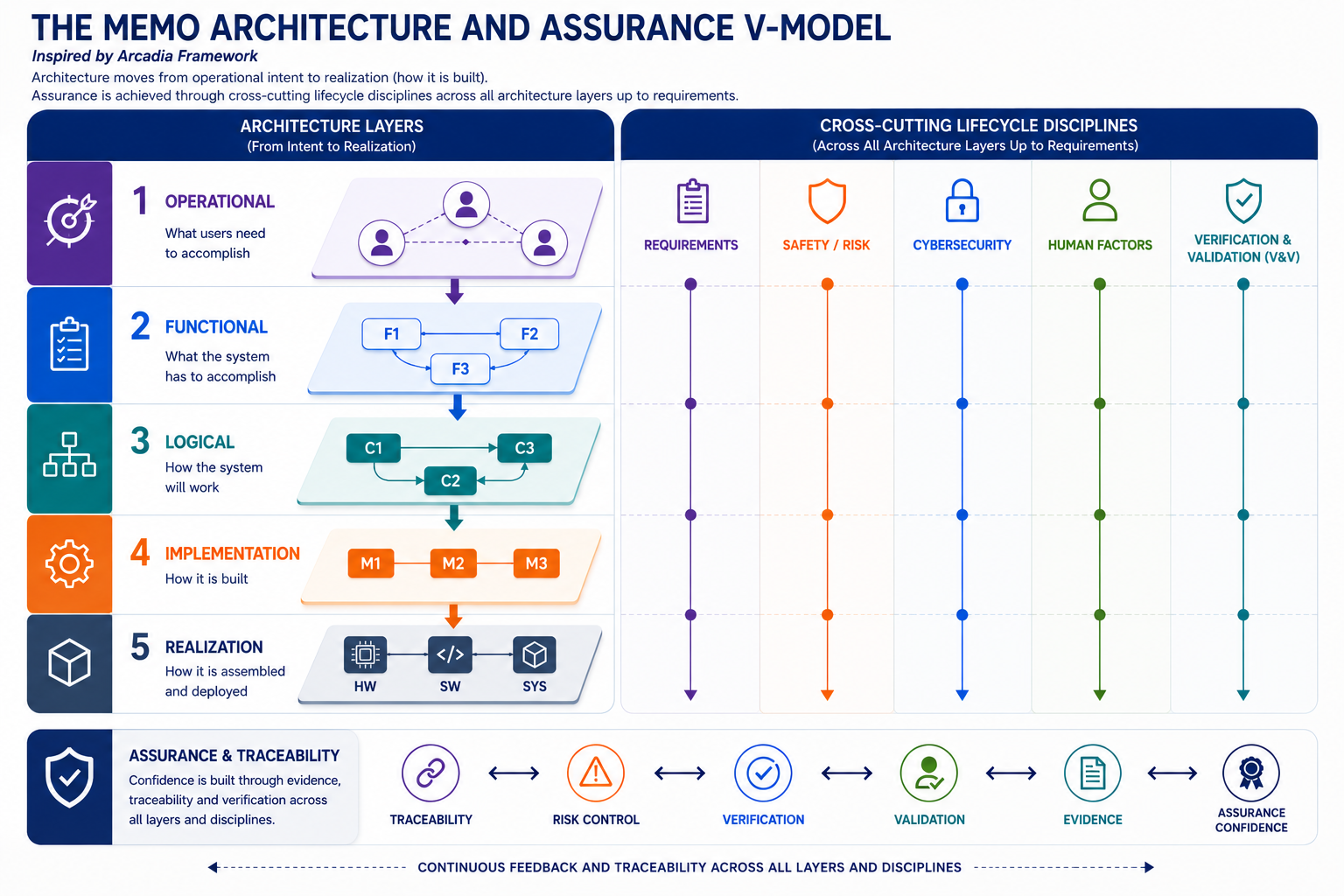
Rules walk required semantic links and flag missing paths. Every hazard needs a control. Every control needs verification. Every verification needs evidence. Gaps surface before design review.

Package structure

Seven working surfaces under memo::

memo::core

Shared foundation

Identity, traceability, documented/evidence elements, controlled values, and typed semantic relationships.

memo::architecture

What the device is

18 Arcadia-inspired layers for context, requirements, behavior, interfaces, hardware, software, risk, cyber, assurance, and decisions.

memo::methodology

How to apply the ontology

Profiles, patterns, rules, workflow steps, quality gates, viewpoints, and project bindings.

memo::viewpoints · views

Who sees what

Stakeholder-oriented concerns and concrete projections — diagram and document-backed views from the same model source.

memo::compliance

Regulated outputs

Controlled artifacts, change management, postmarket traceability, and ISO 14971 risk-management-file views.

memo::examples::gpca

Reference product model

A worked infusion-pump example used to validate and teach the modeling style — from clinical need to evidence view.

Semantic links

Typed connections, not free-form arrows

Methodology

A starting structure, not an empty model

Risk-proportionate scope

ResolvedMethodology keys scope to SafetyClassKind (A/B/C) and lifecycle stage — not a rigor dial.

Viewpoints (ISO 42010)

Viewpoints per audience and workflow stage; a View binds that intent to content.

Rules & gates

ElementUsageRule and RelationUsageRule carry a RuleStrengthKind; WorkflowSteps and QualityGate exit criteria.

Project binding

ProjectMethodBinding pins a resolved method, with reusable ModelingPatterns and archetypes.